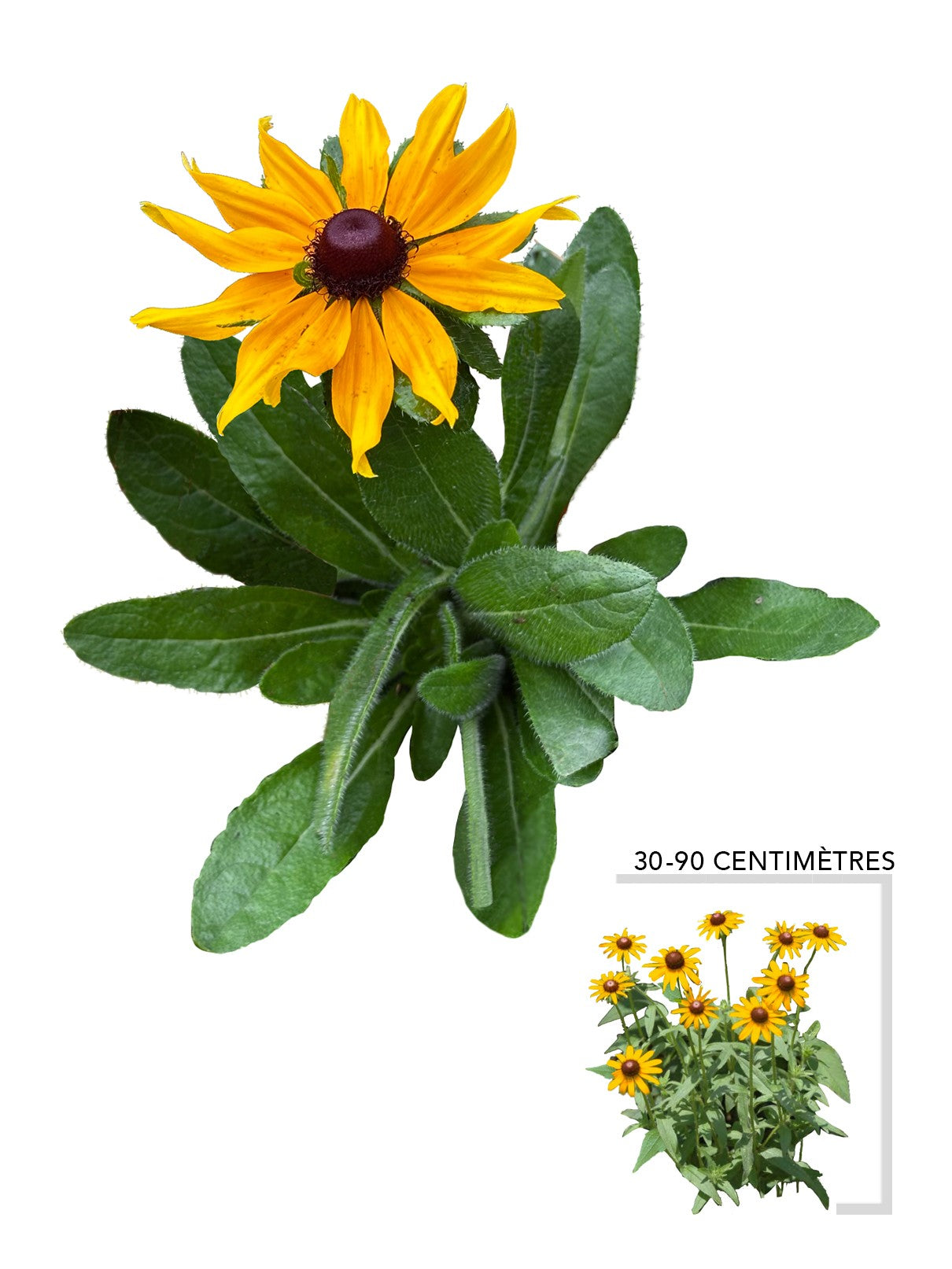


Black Eyed Susan
Hardiness zone: 3
599 in stock
In inventory Out of stock
Couldn't load pickup availability
Black Eyed Susan (Rudbeckia hirta)
Bright Native Pollinator Perennial for Ontario and Eastern Canada (Zones 3–7)
Quick Expert Summary
The Black Eyed Susan (Rudbeckia hirta) is a fast-growing, cold-hardy perennial/biennial ideal for Ontario and Eastern Canada (Zones 3–7). It typically establishes quickly within one season and reaches 1–3 ft (0.3–0.9 m) at maturity. Best for wildflower gardens, pollinator habitats, and low-maintenance borders, it offers bright yellow daisy-like flowers from summer to fall and excellent drought tolerance once established.
Why Choose Black Eyed Susan for Ontario and Eastern Canada?
Extremely hardy native wildflower that thrives in poor soils and harsh climates while providing long-lasting colour and strong pollinator value.
Hardiness: Zone 3 (Ideal for Ontario and Eastern Canada Zones 3–7)
Growth Rate: Fast
Best For: Ornament, Pollinator gardens, Naturalized areas
Maintenance: Low once established
Key Feature: Long-lasting yellow flowers
Native / Non-native: Native to North America
It adapts well to:
- Well-drained soils
- Average to dry soils
- Sandy or clay soils, moderate fertility
- Urban and rural conditions
- Drought, heat, and poor soils
Plant Specifications
| Feature | Details |
| Mature Height | 1–3 ft (0.3–0.9 m) |
| Mature Spread | 1–2 ft |
| Growth Rate | Fast (establishes in first season) |
| Hardiness Zone | 3 (Ideal for Ontario and Eastern Canada Zones 3–7) |
| Sun Exposure | Full sun (tolerates partial shade) |
| Soil Preference | Well-drained, adaptable (dry to moderately moist) |
| Water Needs | Regular first year, low after establishment |
| Drought Tolerance | High once established |
| Deer Resistance | Moderate |
| Lifespan | Short-lived perennial / biennial (self-seeds freely) |
Is Black Eyed Susan Right for Your Yard?
Choose Black Eyed Susan if:
- You want fast colour in the first growing season
- You have a small to medium yard
- You live in Zone 3–7
- You want bright summer flowers and pollinator activity
- You need a plant for naturalized areas, borders, or wildflower gardens
Not ideal if:
- You want a long-lived structural plant
- You need a plant for full shade
- You prefer a formal, highly controlled garden because of its self-seeding habit
Best Uses
- Flower borders
- Wildflower meadows
- Pollinator gardens
- Cottage gardens
- Naturalized landscapes
Why it works:
Black Eyed Susan produces abundant blooms over a long season, thrives in poor and dry soils, and reseeds naturally, creating a sustainable and evolving planting. Its open flower structure makes it highly attractive to bees and butterflies.
What Makes Black Eyed Susan Special?
A classic North American wildflower known for its resilience and long bloom period.
- Spring: Rapid vegetative growth from seed or returning plants
- Summer: Bright yellow flowers with dark centers dominate the garden
- Fall: Continued flowering and seed production for wildlife
- Winter: Seed heads provide food for birds and natural texture
Winter Survival in Ontario and Eastern Canada
Yes, Black Eyed Susan is hardy in Ontario and Eastern Canada Zones 3–7 and tolerates typical Canadian winter conditions including snow and freezing temperatures.
First-year tip:
- Add 2–3 inches of mulch
- Water deeply before the first hard frost
- Consider wind protection if your site is exposed
Planting Guide for Ontario and Eastern Canada
Best planting time:
- Spring (April–June)
- Early fall (September–October)
Spacing:
- 1–2 ft from foundations
- 1–2 ft between plants
Watering (first year):
- Water deeply once or twice per week for 6–8 weeks
- Adjust based on rainfall and soil drainage
Quick Answers (FAQ)
Is it cold hardy in Ontario and Eastern Canada?
Yes. It is hardy to Zone 3 and performs well in Zones 3–7.
What growing conditions does this plant need (sun and soil)?
Full sun and well-drained soil; highly adaptable to dry to moderately moist conditions.
Is Black Eyed Susan good for pollinators and wildlife?
Yes. It attracts bees, butterflies, and beneficial insects, and its seeds feed birds.
Are the roots invasive?
No. Roots are not invasive, but the plant self-seeds readily. Allow about 1–2 ft spacing.
Is it messy?
Moderate. Spent flowers and self-seeding can create a naturalized look.
Compare With Similar Perennials
| Plant | Growth | Key Feature | Best For |
| Black Eyed Susan | Fast | Long yellow bloom season | Pollinator gardens |
| Purple Coneflower | Moderate | Large cone flowers, long-lived | Structured perennial beds |
| New England Aster | Fast | Late-season purple blooms | Fall colour and pollinators |
Shipping Across Quebec, Ontario and Atlantic Provinces
- Nursery-grown
- Carefully packaged
- Shipped to your door in Ontario and Eastern Canada
- Healthy root system guarantee (if applicable)
Explore Related Collections
Related Articles
- Canada’s 9 Hardiness Zones Explained | Quick Overview
- Best Native Perennials for Pollinators in Ontario
- How to Create a Low-Maintenance Wildflower Garden
Sizes of our plants
Sizes of our plants
Our trees and shrubs are sold in two sizes: small (110 ml volume) and large (310 ml volume).
Volume discount
Volume discount
At TreesOnline.ca, the more you buy, the more you save! We offer a volume discount program that benefits our customers who place large orders! To find out the discount you will receive, based on the value of your order, consult the table below.
From $0.00 to $199.99 = 0% discount
From $200.00 to $299.99 = 5% discount
$300.00 and over = 10% discount
Delivery across Canada
Delivery across Canada
Delivery available across Canada. Order now and receive your plants within a few business days.
Nursery pickup: A flat preparation and packaging fee of $8 will be added to your bill upon pickup. Select the "nursery pickup" option at checkout on our online store.
Quebec and Ontario: Base fee of $28, plus 20% of the plants' value. Add $5 for signature.
All other Canadian provinces: Base fee of $50, plus 20% of the plant value. Add $5 for signature.
Glossary of trees and shrubs of Quebec
Glossary of trees and shrubs of Quebec
Questions about our terminology? Consult our online glossary .
Share


Satisfied customers