Forestry Glossary of Trees and Shrubs of Eastern Canada
Questions regarding certain terminology used when talking about trees and shrubs?
Consult our forestry glossary:
Acidic: Having a pH less than 7; which has a relatively high concentration of hydrogen ions (as opposed to alkaline, especially when used to characterize a soil).
Annual: Refers to a plant that lives for only one year.
Shrub: Small tree, unbranched from the base, 4.0 m to less than 6.0 m tall.
Small tree: from 6.0 m to 13.0 m.
Average tree: from 13.0 m to 20.0 m.
Large tree: 20.0 m and over.
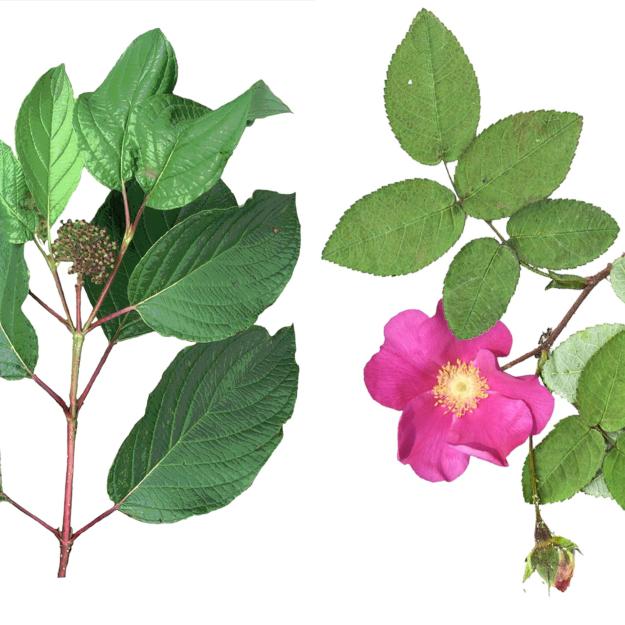
Shrub: A woody plant with a stem that branches at the base.
Basic: Having a pH greater than 7; which has a relatively low concentration of hydrogen ions (as opposed to acidic, especially when used to characterize a soil).
Cutting (one): Cutting is a method of vegetative propagation of certain plants consisting of giving rise to a new individual (a perfect clone of the mother plant) from an isolated organ or fragment of an organ. (Wikipedia).
Collar: Location on a plant that is both the starting point of the roots and that of the stem.
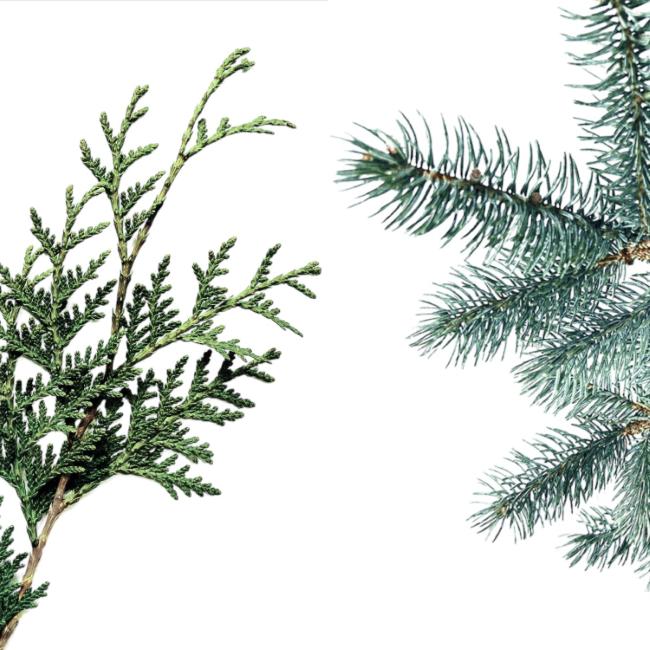
Conifer: A tree belonging to the order Conifer, usually with evergreen needle-like foliage, which produces cones and whose wood is described as "resinous", "soft" or "soft" in the trade.
Diameter: Diameter of the main stem of a tree at breast height, i.e., 1.3 meters above ground level; the abbreviation "dhp" is commonly used.
Dormancy: A biological process during which a plant almost completely ceases its growth activities and merely maintains existing tissues. Dormancy is induced by periods of water and/or heat stress.
Drainage: The downward, internal flow of excess water from the soil. It is influenced by soil texture, structure, and depth. Furthermore, it varies seasonally due to rainfall and/or runoff. Its classification is based on assessments of mottling (spotting), gley color, texture, depth, and soil structure.
Leafing: Bursting of buds and expansion of leaves in spring.
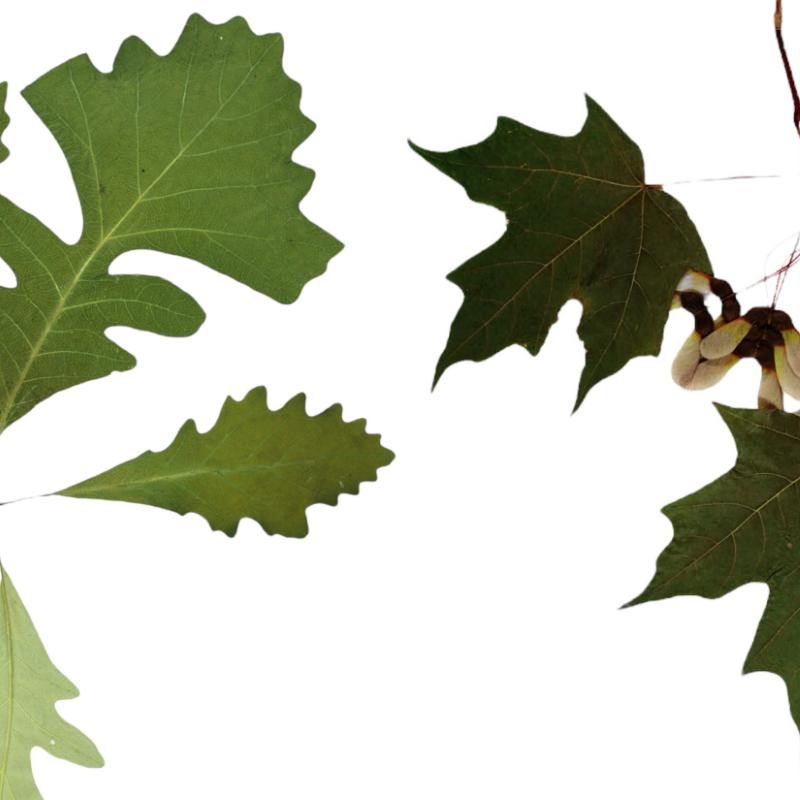
Deciduous: Said of a tree (usually with broad leaves) which loses all its leaves at a certain time of year; wood referred to as "hardwood" in trade.
Germination: Resumption of active growth in the embryo of a seed, confirmed by the emergence of a radicle (embryonic axis of the root).
Herbaceous: Non-woody flowering plant.
Soil moisture: Relative amount of water in the soil; usually applies to the upper layers of the soil, sometimes to humus.
Hybrid: Produced by crossing two individuals (plants) of different species; it may have more desirable traits.
Native: A plant that grows spontaneously in a country is said to be native. It has not been introduced by humans to the territory it occupies and it reproduces without human intervention or cultivation. (see naturalized plant).
Organic matter: Component of the soil that contains totally or partially decomposed plant matter.
Naturalized: Said of a plant of foreign origin. After being introduced, it has become acclimatized and reproduces without human intervention.
pH: Measures the concentration of hydrogen ions on a scale from 0 (very acidic) to 14 (very basic). A pH of 7 indicates neutral conditions. A difference of one pH unit corresponds to a tenfold difference in the amount of hydrogen ions (e.g., a pH of 5.0 is ten times more acidic than a pH of 6.0).
Floodplain: An area of land bordering a watercourse where sediments have been deposited and which is subject to periodic flooding.
Root: The underground part of a tree or plant that serves for physical support, absorption of water and nutrients from the soil, and storage of nutrients produced by photosynthesis.
Seedling: Small tree grown from a seed; generally applies to trees whose diameter at breast height does not exceed 1 cm.
Carbon sequestration: The process of increasing carbon in a carbon reservoir other than the atmosphere.
Calcareous soil: Soil containing enough calcium carbonate, often associated with magnesium carbonate, to cause visible effervescence upon contact with 10% cold hydrochloric acid (HCl).
Mineral soil: Soil composed mainly of inorganic matter which determines its properties. Its organic matter content is usually less than 20%.
Soil texture: Defined by the relative proportions of sand, silt, and clay. The texture class can be determined by chemical and physical analyses performed by a commercial laboratory. It is also possible to determine it using various "touch tests" (e.g., if a soil feels "floury" to the touch, it likely contains a relatively high percentage of silt).
Stem: Trunk of a tree.
Perennial: A plant that lives for more than two years.