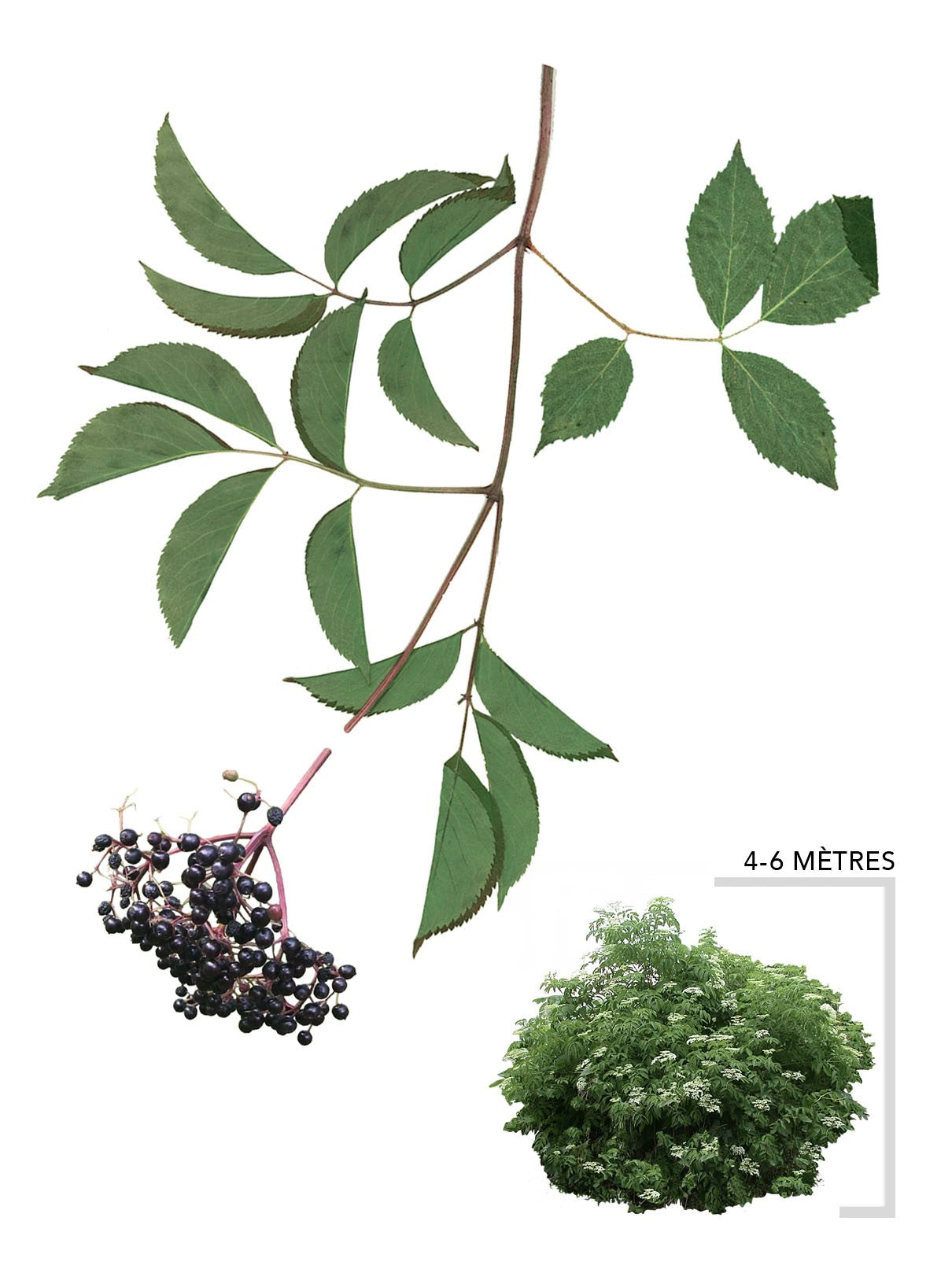


Black Elderberry
Hardiness zone: 3
97 in stock
In inventory Out of stock
Couldn't load pickup availability
Black Elderberry (Sambucus canadensis)
Edible Native Fruit Shrub for Ontario and Eastern Canada (Zones 3–7)
Quick Expert Summary
The Black Elderberry (Sambucus canadensis) is a fast-growing, cold-hardy native shrub ideal for Ontario and Eastern Canada (Zones 3–7). It typically grows 2–3 ft per year (60–90 cm) and reaches 13-20 ft (4-6 m) at maturity with a spread of about 10 ft (3 m). Best for edible landscaping, wildlife gardens, and natural hedges, it offers fragrant white summer flowers and abundant edible dark berries along with excellent adaptability to a wide range of soils.
Why Choose Black Elderberry for Ontario and Eastern Canada?
Black Elderberry is a highly versatile native shrub combining ornamental beauty, edible fruit, and strong adaptability to Canadian growing conditions.
- Hardiness: Zone 3 (Ideal for Ontario and Eastern Canada Zones 3–7)
- Growth Rate: Fast
- Best For: Privacy, ornament, edible landscaping
- Maintenance: Low once established
- Key Feature: Edible berries and fragrant flowers
- Native / Non-native: Native to Canada and Eastern North America
It adapts well to:
- Clay soils
- Sandy soils
- Loamy and humus-rich soils
- Urban and rural environments
- Cold climates and variable moisture conditions
Tree/Shrub Specifications
| Feature | Details |
|---|---|
| Mature Height | 13-20 ft (4-6 m) |
| Mature Spread | ~10 ft (3 m) |
| Growth Rate | 2–3 ft per year |
| Hardiness Zone | 3 (Ideal for Ontario and Eastern Canada Zones 3–7) |
| Sun Exposure | Full sun to partial shade |
| Soil Preference | Moist, well-drained, adaptable |
| Water Needs | Moderate (regular first year) |
| Drought Tolerance | Low to moderate |
| Deer Resistance | Moderate |
| Lifespan | 20–40+ years |
Is Black Elderberry Right for Your Yard?
Choose Black Elderberry if:
- You want edible fruit within 2–3 years
- You have a medium to large yard
- You live in Zone 3–7
- You want flowers + berries + wildlife value
- You need a shrub for natural hedges or edible gardens
Not ideal if:
- Your soil is very dry
- You want a highly formal or compact plant
- You are planting in deep shade
Best Uses
- Edible gardens
- Natural hedges
- Wildlife habitat
- Pollinator-friendly planting
- Naturalized landscapes
Why it works: Its dense growth, abundant flowering, and fruit production make it ideal for both ecological landscaping and edible gardening while supporting pollinators and birds.
What Makes Black Elderberry Special?
A multi-purpose native shrub that delivers beauty, biodiversity, and harvest.
- Spring: Bud break and rapid leaf development
- Summer: Large clusters of fragrant white flowers
- Fall: Dark purple-black berries rich in nutrients
- Winter: Structural branching adds natural texture
Winter Survival in Ontario and Eastern Canada
Yes, Black Elderberry is hardy in Ontario and Eastern Canada Zones 3–7 and tolerates typical Canadian winter conditions including snow and freezing temperatures.
First-year tip:
- Add 2–3 inches of mulch
- Water deeply before the first hard frost
- Protect from extreme drying winds if exposed
Planting Guide for Ontario and Eastern Canada
Best planting time:
- Spring (April–June)
- Early fall (September–October)
Spacing:
- 6–10 ft from foundations
- 6–8 ft between plants
Watering (first year):
- Water deeply 1–2 times per week
- Maintain consistent moisture
- Adjust based on rainfall
Quick Answers (FAQ)
How fast does Black Elderberry grow in Ontario?
Typically 2–3 ft per year in good conditions.
Is it cold hardy in Ontario?
Yes. It is hardy to Zone 3 and performs very well in Eastern Canada.
Does it need another tree for pollination?
Not required, but planting multiple shrubs can improve fruit production.
Are the roots invasive?
No, but it can spread by suckers—ideal for naturalized areas.
Is it messy?
Moderate—flowers and berries may drop, especially during harvest season.
Compare With Similar Trees/Shrubs
| Tree | Growth | Key Feature | Best For |
|---|---|---|---|
| Black Elderberry | Fast | Edible berry clusters, pollinator-friendly flowers, wildlife value | Edible landscapes, naturalized hedges, pollinator gardens |
| Red Elderberry | Moderate-Fast | Elderberry-like habit, showy fruit, native wildlife shrub | Naturalized plantings, woodland edges, wildlife gardens |
| American Cranberry | Moderate | Bright red fruit, strong fall interest, hardy native shrub | Hedges, four-season landscapes, wildlife-friendly borders |
Shipping Across Quebec, Ontario and Atlantic Provinces
- Nursery-grown
- Carefully packaged
- Shipped to your door in Quebec, Ontario and Atlantic Provinces
- Healthy root system guarantee
Explore Related Collections
- Deciduous Shrubs
- Edible Trees & Shrubs
- Hardiness Zone 3 Plants
- Pollinator Plants
- Privacy Hedge Shrubs
Related articles:
Sizes of our plants
Sizes of our plants
Our trees and shrubs are sold in two sizes: small (110 ml volume) and large (310 ml volume).
Volume discount
Volume discount
At TreesOnline.ca, the more you buy, the more you save! We offer a volume discount program that benefits our customers who place large orders! To find out the discount you will receive, based on the value of your order, consult the table below.
From $0.00 to $199.99 = 0% discount
From $200.00 to $299.99 = 5% discount
$300.00 and over = 10% discount
Delivery across Canada
Delivery across Canada
Delivery available across Canada. Order now and receive your plants within a few business days.
Nursery pickup: A flat preparation and packaging fee of $8 will be added to your bill upon pickup. Select the "nursery pickup" option at checkout on our online store.
Quebec and Ontario: Base fee of $28, plus 20% of the plants' value. Add $5 for signature.
All other Canadian provinces: Base fee of $50, plus 20% of the plant value. Add $5 for signature.
Glossary of trees and shrubs of Quebec
Glossary of trees and shrubs of Quebec
Questions about our terminology? Consult our online glossary .
Share


Satisfied customers