

What Is the Best Tree to Plant in Eastern Canada?
When planning your landscape in Eastern Canada, one question often comes up: what is the best tree to plant?
The answer is simple—there isn’t just one. The best tree depends on your specific site conditions and your goals.
The good news is that with the right approach, you can confidently choose a tree that will thrive in your environment. Here’s how.
Understanding Your Environment: The Key to Long-Term Success
Before choosing a tree based on personal preference, take the time to understand your planting conditions. Look around you—what trees are already thriving nearby? Where are they growing? If possible, speak with local property owners or gardeners.
Ask yourself a few key questions: what is your hardiness zone? What type of soil do you have? Will the tree receive full sun or shade?
This step is essential. A tree that is not adapted to its environment will be less vigorous and more vulnerable to stress. Over time, its survival may be compromised.
Hardiness Zones in Canada

Canada’s vast territory includes a wide range of climates, divided into plant hardiness zones. These zones help determine whether a tree can survive winter conditions in your region.
In general, the lower the zone number, the harsher the winter. For example, Zone 3 is colder than Zone 5, meaning a Zone 5 tree will not survive in Zone 3 conditions.
To find your zone, consult the official Canadian hardiness map or use this online tool.
Soil Type and Growing Conditions

Soil conditions vary widely—some soils are clay-heavy and retain moisture, others are sandy and well-drained, while some are rich in organic matter.
Understanding your soil is essential. A soil test can reveal pH, fertility, and drainage capacity—key factors for long-term success.
Each species has its preferred conditions. For example, an oak thrives in moist, well-drained soil, while a weeping willow prefers areas near water.
Sun Exposure

Sun exposure directly affects growth, flowering, and overall tree health.
Trees that require full sun may struggle in shade, showing reduced growth and increased susceptibility to disease. Conversely, shade-tolerant species may suffer in full sun.
Full sun typically means at least 6 hours of direct sunlight per day.
Key Criteria for Choosing the Right Tree
Choosing a tree is a long-term decision. As your tree matures, will it have enough space? Could it interfere with buildings or nearby structures?
Planning ahead helps avoid future problems and ensures your tree integrates well into its surroundings.
Planting Location
Think about distance from your home’s foundation. Large trees planted too close can cause structural issues. Also consider overhead power lines—trees planted underneath may require frequent pruning.
Mature Size and Form

Whether you want dense shade or a more open canopy, the tree’s mature height, spread, and shape must be considered carefully.
A well-chosen tree will fit naturally into your landscape and meet your needs.
Aesthetic and Functional Preferences
Once site conditions are understood, your personal preferences come into play. Whether you’re drawn to vibrant fall colour or fragrant blooms, your choice should reflect both beauty and function.
Trees can provide shade, privacy, wind protection, and habitat for wildlife.
Tools to Help You Choose
Now that you understand your site, you can use selection tools more effectively. We recommend this Hydro-Québec tool to find trees adapted to your specific growing conditions.
Examples of Easy-to-Grow Trees by Mature Size
Here are a few tree selections that come close to the “ideal tree”: low-maintenance, resilient, and adaptable—when planted in the right conditions.
Small Trees (under 13 metres)
Amur Maple (Acer ginnala)

Hardy to Zone 3, this small tree is ideal for compact spaces and adapts well to a variety of soils and light conditions.
It tolerates urban environments and harsh winters. Its fragrant spring flowers and vibrant fall colour—from yellow to bright red—add strong ornamental value.
Low maintenance, requiring only occasional pruning and regular watering during establishment.
At maturity, it reaches 8 to 10 metres. Its samaras provide food and shelter for wildlife.
Japanese Tree Lilac (Syringa reticulata)

Japanese Tree Lilac (Syringa reticulata) is a highly reliable small tree for Eastern Canada landscapes, known for its strong tolerance to cold. Hardy to zone 2a, it can be grown in most regions of the province. It also adapts well to a wide range of soil conditions, whether clay or sandy, acidic or alkaline.
Its flowering period is notable, with abundant creamy white panicles and a light fragrance from late June to July. These blooms provide a food source for pollinators and contribute to local biodiversity.
After flowering, light pruning helps maintain its structure and supports consistent blooming in the following season. Regular watering—especially during dry periods—along with balanced fertilization promotes steady, healthy growth.
Saskatoon Serviceberry (Amelanchier alnifolia)

This native species offers year-round interest: spring flowers, edible berries, and vibrant fall colour.

It thrives in well-drained soils and tolerates drought once established.
It grows well in full sun to partial shade and shows good drought tolerance once established.
Hardy to zone 2b, Saskatoon Serviceberry (Amelanchier alnifolia) is a very resilient small tree. It tolerates a wide range of climatic conditions, making it a reliable choice for many gardens.
Medium Trees (13–20 metres)
Little-leaf Linden (Tilia cordata)

A graceful tree known for its dense shade and fragrant flowers that attract pollinators.

Adaptable but prefers well-drained soil. Avoid planting near roads due to sensitivity to road salt.
Hardy to zone 3, Littleleaf Linden (Tilia cordata) tolerates a wide range of temperature fluctuations. Its mature size makes it a popular choice for parks and residential landscapes.
Pin Oak (Quercus palustris)
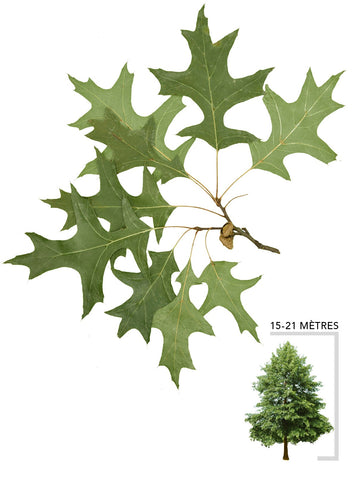
A fast-growing tree well suited to moist soils, with striking red fall colour.
Pin Oak (Quercus palustris) requires little maintenance once established and generally shows good resistance to disease. It thrives in full sun but also tolerates partial shade. Because of its fast growth, it is best suited to larger gardens where it has enough space to develop properly.
Large Trees (20 metres and over)
Red Oak (Quercus rubra)

A native tree valued for its size, fall colour, and importance for wildlife.
Its large leaves shift from deep green in summer to shades of red, orange, and purple in fall, while also providing habitat and food for birds and supporting local wildlife.
It grows best in moist, well-drained soils ranging from acidic to slightly alkaline, showing good adaptability. In full sun, it develops a vigorous growth habit and a solid, well-structured form.
Hardy to zone 3, it is well suited to Eastern Canada’s winter conditions. Once established, it requires little maintenance, but it does need ample space—making it a good fit for large landscapes, parks, and naturalized areas.
Colorado Spruce (Picea pungens glauca)

A striking conifer with blue-silver foliage, very cold-hardy and ideal for structuring large landscapes.
Hardy to zone 2, it is well adapted to harsh Canadian winters and develops a classic pyramidal form with steady growth. It tolerates a range of soil types, provided they are well drained.
Low-maintenance once established and generally resistant to pests and disease, it is a strong choice for creating focal points or adding structure to larger landscapes and parks.
Choosing the Right Tree: A Long-Term Investment
Planting a tree is an investment in the future. By understanding your environment, you can choose a tree that will thrive and provide lasting benefits.
And remember—your local nursery can always guide you toward the best choice for your site.


